We ask how planetary systems come to be.
We seek to understand how physics and chemistry shape young stars and disks, and ultimately, give rise to the diverse planetary systems that we see today.
The questions driving our research.
What determines which planets a disk can build?
A disk’s temperature, density, and composition shape the types of planets that form, from atmospheres to architectures. We map these properties across disks and how they influence planetary outcomes.
How do disks become the exoplanets we detect?
We observe disks and exoplanets at very different stages of their lives. We work to bridge that gap by connecting the conditions in young disks to the wider exoplanet populations and our own Solar System.
Where does chemical complexity come from?
We study how molecules form, survive, and evolve across the interstellar medium and into protoplanetary disks — tracing a chemical thread from diffuse gas to the material that planets are built from.
What does each wavelength reveal?
Radio interferometers, like ALMA, VLA, and SMA, trace the bulk gas and dust in the outer disk. JWST probes the hot inner regions, while optical facilities, such as the LBT, provide complementary views.
Current group members

Prof. Charles Law
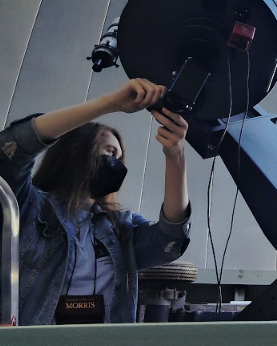
Alexis Riggs